
Easy Home Activities That Help Children Thrive With Gestalt Language Processing

You already know your child learns language differently. You've done the research, spoken with professionals, and understand that your little one is a gestalt language processor. Now comes the practical part: what can you actually do at home to support their communication journey?
The good news? You don't need fancy equipment or professional training. The best language support at home happens through everyday moments you're already sharing together. This guide gives you 10 simple activities woven into daily routines that genuinely make a difference.
For a deeper understanding of how gestalt language development works, visit our complete guide to gestalt language processing.
Key Takeaways
- Gestalt language processing support fits naturally into your existing routines
- No special equipment or training required
- Model language naturally and follow your child's lead
- Consistency matters far more than perfection
- These activities work across all GLP stages
10 Home Activities to Support Your Gestalt Language Processor

1. Wake-Up Routines That Support Language Development
Morning greetings offer a perfect opportunity for communication routines. Use the same phrases each day to build familiarity and comfort.
What to say:
- "Good morning, sunshine"
- "Time to wake up"
- "Hello, sleepy head"
This validates their communication while gradually nudging them towards generating new language — all while respecting the strategy that works for them.
2. Getting Dressed as a Communication Routine
Dressing time is predictable, which makes it ideal for building language support at home. Narrate what's happening using short, clear phrases.
- "Shirt on"
- "Arms through"
- "Socks on feet"
Pause after familiar phrases and wait. Your child might fill in the next word. If they don't, that's fine. Simply continue modelling without pressure.
Replace questions with statements. Instead of "What do you want to wear?" try "Let's choose a shirt" while holding up two options.
3. Mealtime Language Support at Home
Breakfast, lunch, and dinner happen every single day, making mealtimes powerful opportunities for parent-led language activities. Natural repetition helps your child absorb functional phrases.
Phrases worth modelling:
|
Situation |
Phrase to Model |
|
Offering food |
"More toast?" |
|
Finishing |
"All done" |
|
Enjoying food |
"Yummy banana" |
|
Requesting |
"Want more" |
If your child uses a script during meals, acknowledge it. Perhaps they say "to infinity and beyond" when excited about pudding. That's communication. Respond with warmth: "You love pudding!"
Minimise distractions during meals. Screens off, focus on connection.
4. Parent-Led Language Activities During Sensory Play
Sensory experiences like water play, sand, and playdough create joyful, low-pressure moments for communication skills to flourish.
Language to model:
- "Squish it"
- "Pour the water"
- "So squishy"
- "Cold and wet"
Follow your child's lead entirely. If they want to pour water repeatedly, narrate that action repeatedly. Repetition isn't boring for gestalt processors—it's essential.
These moments aren't about teaching. They're about sharing experience and letting language happen naturally.
5. Building Communication Skills Through Pretend Play
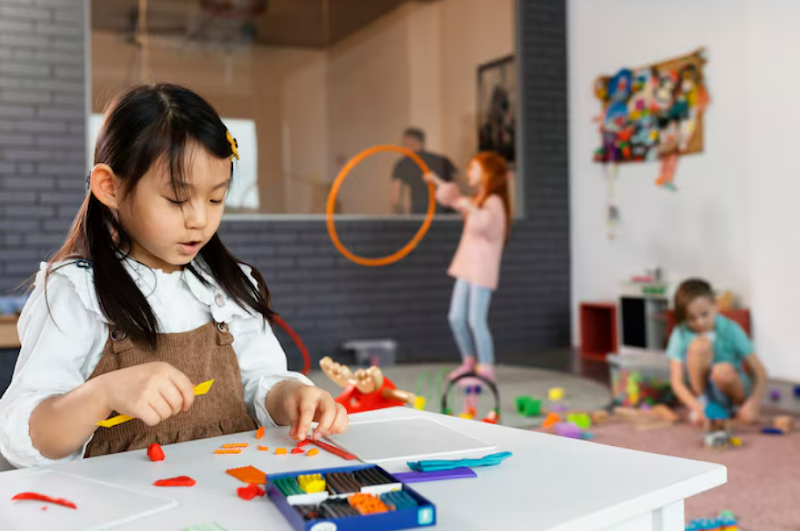
Pretend play invites natural scripts and provides rich language routines your child can absorb and eventually adapt.
Ideas for play:
- Toy kitchen: "Cooking dinner," "Stir the pot"
- Dolls: "Baby's sleeping," "Give cuddles"
- Cars: "Car goes fast," "Beep beep"
Join the play without directing it. Sit alongside your child and narrate what's happening rather than asking questions or giving instructions. Pretend scenarios mirror real life, helping children practise language they'll use in everyday situations.
6. Singing Songs to Support Gestalt Language Processing
Songs are incredibly powerful for gestalt processors because they're naturally chunked, melodic, and emotionally engaging.
Best song choices:
- Repetitive lyrics (Wheels on the Bus, Old MacDonald)
- Action songs (Head, Shoulders, Knees and Toes)
- Simple melodies your child already loves
Pause before key words and wait. In "The wheels on the bus go round and..." your child might fill in "round." If not, simply complete it yourself. Sing the same songs often. Familiarity breeds confidence, and confidence supports gestalt language processing development.
7. Reading Books Together for Language Routines
Repetitive picture books are gold for gestalt processors. The predictable text becomes a gestalt your child can absorb and eventually adapt.
Tips for reading:
- Choose books with repeated phrases
- Read favourites over and over without rushing
- Point to pictures while narrating simply
- Use book phrases during daily life
If a book says "Brown bear, brown bear, what do you see?" use that phrase when looking out the window together. You can then gently expand on it — "Brown bear, brown bear… I see a dog! Do you see the dog?" This helps your child take a familiar gestalt and begin using it functionally, connecting language they already know to real moments in their day.
Let your child hold the book, turn pages, and lead the pace.
8. Bath Time Communication Routines
Water play creates relaxed, sensory-rich moments perfect for language support at home. The enjoyment itself supports emotional connection to language.
Bath time phrases:
- "Splish splash"
- "Warm water"
- "Wash your tummy"
- "Bubbles everywhere"
Respond to any scripts your child uses by acknowledging them and building on them. If they say "rubber ducky, you're the one" from a song, join in and gently expand — "Rubber ducky! He's having a bath, just like you!" Daily routines like bath time are actually one of the best opportunities to expand scripts naturally, because the relaxed, predictable setting makes children more receptive to new language.
9. Outdoor Walks as Parent-Led Language Activities
Nature offers endless narration opportunities without any preparation needed. Fresh air and movement also support regulation, which helps children engage.
Simple observations to model:
- "Big tree"
- "Bird flying"
- "Puddle!"
- "Wind blowing"
Let your child lead the walk. Comment on what captures their attention rather than directing their focus. If they stop to watch an ant, you stop too. "Little ant. Crawling fast."
These parent-led language activities work because they follow genuine interest rather than creating artificial teaching moments.
10. Bedtime Routines for Gestalt Language Processing
Predictable bedtime phrases bring comfort and security while supporting gestalt language processing naturally.
Bedtime language
- "Night night"
- "Sleep tight"
- "See you in the morning"
- "Love you lots"
Read the same bedtime story repeatedly if your child wants it. Familiar stories become comforting gestalts that help children feel safe.
Keep language calm and simple before sleep. This isn't the time for questions or new vocabulary—just gentle, predictable connection.
Quick Tips for Responding to Your Child's Scripts
When your child uses a script, remember these principles:
- Acknowledge first. Repeat what you heard or respond warmly
- Be a detective. Consider where the script came from and what it might mean
- Model gently. Offer slight variations without demanding change
- Keep notes. A simple log of scripts and their meanings helps you and your therapist track progress
Scripts are communication. Treat them that way.
Frequently Asked Questions About Gestalt Language Processing Activities
Do I need special training to support gestalt language development at home?
No. Everyday moments are your best tools. Following your child's lead, modelling natural phrases, and staying consistent is genuinely enough. You're already equipped
How long before I see progress with these communication routines?
Progress varies widely between children. Focus on consistency over weeks and months rather than expecting immediate results. Small shifts often happen before big leaps.
Can siblings help with language support at home?
Absolutely. Siblings naturally model language during play, often without even trying. Their interactions provide valuable exposure to varied communication routines in relaxed settings.
Supporting Your Child's Communication Journey
Every child's path with gestalt language processing looks different. What matters most isn't doing everything perfectly—it's showing up consistently with patience and warmth.
These activities aren't extra tasks to add to your day. They're ways of being present in moments you're already sharing. Trust yourself. You know your child best.
If you'd like personalised guidance for your family, The Speech Practice offers both in-person sessions and teleconsultations to support your child's unique communication needs. Our team is here to partner with you on this journey.