
Simple Feeding Strategies That Help Babies and Toddlers With Down Syndrome Build Confident Eating Skills


Feeding your baby or toddler with Down Syndrome can feel overwhelming at times. If mealtimes have become stressful, you're not alone—and it's certainly not your fault. Children with Down Syndrome often experience low muscle tone and oral motor differences that make eating more challenging than expected. The good news? With the right feeding strategies for Down Syndrome, your child can build confident eating skills at their own pace.
This guide shares 10 practical strategies to support safe feeding for infants and provide meaningful toddler feeding support. Remember, every small step forward truly matters.
Key Takeaways
- Feeding strategies for Down Syndrome focus on positioning, pacing, and patience to help your child feel safe during meals
- Oral motor skills develop gradually—small daily efforts lead to big progress over time
- Safe feeding for infants starts with proper seating and head support to reduce choking risk
- Toddler feeding support means celebrating progress, not perfection, and avoiding mealtime pressure
Why Feeding May Look Different
Before diving into strategies, it helps to understand why feeding can be different for children with Down Syndrome.
Children with Down syndrome have hypotonia (low muscle tone), which affects the muscles used for chewing and swallowing. You might notice tongue thrust, difficulty closing lips around a spoon, or slower chewing patterns.
These are common and manageable. With consistent support, your child's oral motor skills will strengthen over time.
Ten Feeding Strategies for Children with Down Syndrome

1. Check for Feeding Readiness Before Starting Solids
There's no rush to start solids. Focus on readiness signs rather than a specific age.
Look for these cues:
- Steady head control
- Sitting with support in a highchair
- Showing interest in food (watching you eat, reaching for your plate)
2. Position Your Child for Safe Feeding
Proper positioning is essential for safe feeding for infants and toddlers alike.
Key positioning tips:
- Seat your child upright with good back support
- Ensure feet are resting on a footrest or flat surface
- Keep hips, knees, and ankles at 90-degree angles
- Use rolled towels for extra trunk support if needed
When your child feels stable and comfortable, they can focus entirely on eating rather than balancing.
3. Choose the Right Spoon for Oral Motor Development

The spoon you use makes a real difference in developing oral motor skills.
What to look for:
- Shallow bowl (easier for lips to close around)
- Soft silicone or rubber tip
- Small size appropriate for your child's mouth
Avoid deep spoons that deposit too much food at once. A shallow spoon encourages active lip closure and helps your child learn to clear food independently.
Explore feeding tools designed to support oral motor development.
4. Start With Dry Spoon Practice
Before introducing food, let your child get comfortable with the spoon itself.
How to practise:
- Offer an empty spoon once or twice daily
- Present it gently to your child's lips
- Watch for active mouth opening and early tongue movements
This simple step reduces oral sensitivity and builds familiarity. Once your child accepts the dry spoon comfortably without gagging, you're ready to add food.
5. Introduce Purees Gradually With Pacing
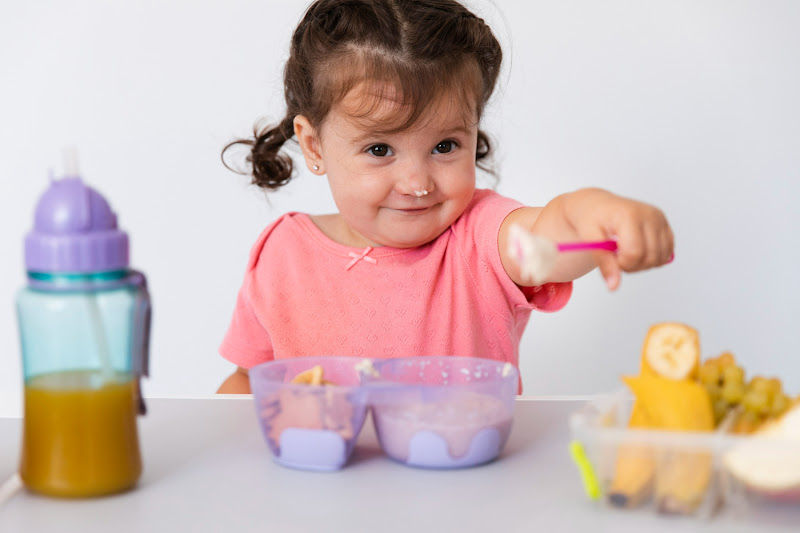
When starting purees, less is more. Pacing is one of the most important feeding strategies for Down Syndrome.
Practical tips:
- Begin with smooth, single-ingredient purees
- Dip the spoon lightly rather than loading it fully
- Wait for your child to swallow completely before offering the next bite
- Watch for lip closure and tongue movement
If your child coughs, gags, or sounds congested, pause and allow them to recover. There's no need to rush—safe feeding for infants means respecting your child's pace.
6. Let the Lips Do the Work
It's tempting to scrape food off the spoon using your child's gums or teeth. Try to resist this habit.
Instead:
- Present the spoon and wait for lips to close around it
- Let your child actively clear the food themselves
- Apply gentle downward pressure on the tongue to encourage backward movement
This approach builds active feeding skills rather than passive acceptance. You might notice tongue thrust initially—this is normal and improves with practice as oral motor skills strengthen.
7. Progress Textures at Your Child's Pace

Texture progression supports ongoing oral motor development. However, every child moves at their own speed.
Texture guide:
|
Easier Textures |
More Challenging Textures |
|
Smooth purees |
Lumpy or mashed foods |
|
Soft, dissolvable foods |
Chewy foods (meat, dried fruit) |
|
Crispy foods that melt |
Fibrous foods (celery, raw vegetables) |
Introduce new textures every few days alongside familiar favourites. If your child struggles, it's okay to step back temporarily. Avoid relying on purees for too long, as texture variety helps develop chewing patterns.
Learn more about how feeding therapy supports children with sensory and feeding difficulties.
8. Encourage Self-Feeding and Exploration
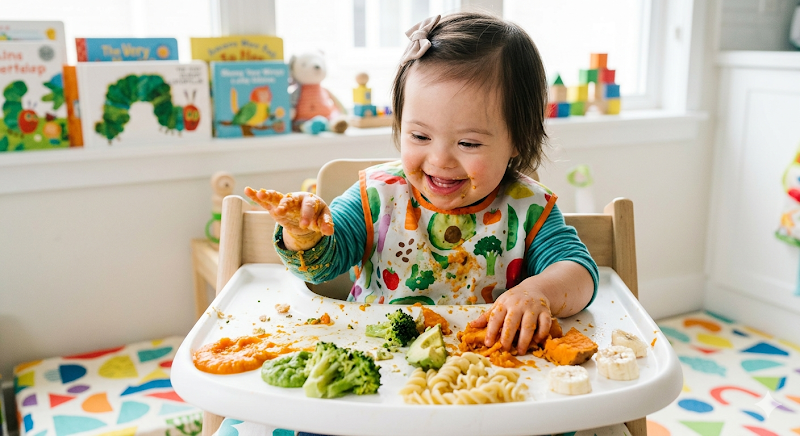
Messy mealtimes are productive mealtimes. Letting your child explore food builds independence and confidence.
Ways to encourage self-feeding:
- Allow finger dipping into purees
- Offer soft finger foods when ready
- Guide hand-to-mouth movements gently
- Eat together as a family—children learn by watching
Toddler feeding support means embracing the mess. Touching, squishing, and even playing with food are all part of learning. These experiences reduce food aversions and build positive mealtime associations.
Discover how baby classes support early development milestones.
9. Create a Calm and Positive Mealtime Environment
Stress at mealtimes can increase feeding challenges. A relaxed atmosphere helps your child feel safe to explore and try new things.
Simple adjustments:
- Turn off screens and reduce background noise
- Keep mealtimes to a reasonable length (20-30 minutes)
- Avoid pressuring your child to eat more
- Celebrate small wins—even just licking a new food counts
If your child refuses food, stay calm. Offer the food again another day without making it a battle. Positive experiences build long-term eating confidence.
10. Know When to Seek Professional Feeding Support

Sometimes, extra support makes all the difference. Don't hesitate to reach out if you're concerned.
Signs professional help may be beneficial:
- Persistent gagging or choking during meals
- Significant weight loss or slow weight gain
- Extreme food refusal lasting several months
- Coughing or wet-sounding breathing during or after eating
A feeding therapist can assess your child's oral motor skills, identify underlying challenges, and provide targeted strategies. Early intervention often leads to faster progress.
Explore feeding therapy for children.
Frequently Asked Questions
When should I introduce solid foods to my baby with Down Syndrome?
Focus on readiness cues rather than age alone. Look for steady head control, trunk stability, and interest in food. Many babies with Down Syndrome start solids around six to seven months, though some begin later—and that's perfectly fine.
How can I help my toddler with Down Syndrome chew safely?
Start with soft, easy-to-melt foods that are simple to manage. As your child’s oral motor skills develop, gradually introduce more textured foods. Make sure your child is seated upright during meals, and allow enough time to chew and swallow before offering the next bite.
What should I do if my child refuses new textures?
Texture sensitivity is common. Introduce new textures slowly alongside familiar foods. Avoid pressure, and celebrate any willingness to explore—even touching or smelling a new food is progress.
Supporting Your Child's Feeding Journey
Every child with Down Syndrome develops eating skills in their own time. The feeding strategies for Down Syndrome shared here are designed to support your child gently, safely, and without pressure.
Remember: small steps lead to big progress. Celebrate each milestone, no matter how small it seems. If you'd like personalised guidance, The Speech Practice is here to help. Our team provides expert toddler feeding support and works alongside families to build confident, happy eaters.