
How Oral Placement Therapy Helps Children With Down Syndrome Speak More Clearly

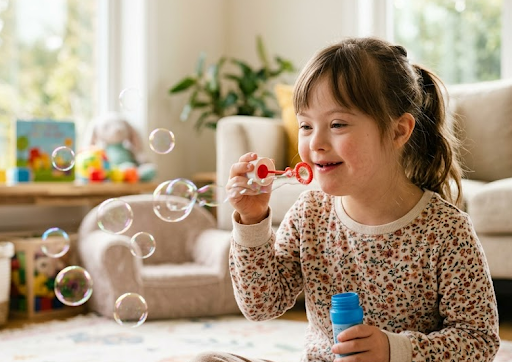
Your child has so much to say. You can see it in their eyes, their gestures, the way they try again and again to get a word out. But the sounds come out unclear, and the people around them struggle to understand.
If you are raising a child with Down syndrome, this is likely a familiar experience. Speech clarity in Down syndrome is one of the most common challenges families face, and it is not a reflection of what your child knows or understands. It is a physical challenge, rooted in the muscles of the mouth. The good news is that oral placement therapy (OPT) offers a targeted, hands-on approach that helps children build the oral strength they need to speak more clearly. This guide explains how OPT works, what happens in sessions, and what kind of progress you can realistically expect.
Key Takeaways
- Low oral muscle tone is a primary reason speech clarity is affected in children with Down syndrome.
- Oral placement therapy uses tactile input and specialised tools, going beyond the traditional "listen and repeat" approach.
- The TalkTools method targets jaw stability, lip strength, and tongue control in a structured, step-by-step hierarchy.
- Progress looks different for every child. Some families notice changes gradually over time, while others may see shifts at different points in their journey, depending on the child's individual profile, consistency of practice, and clinician guidance.
Why Speech Clarity Is a Common Challenge in Down Syndrome
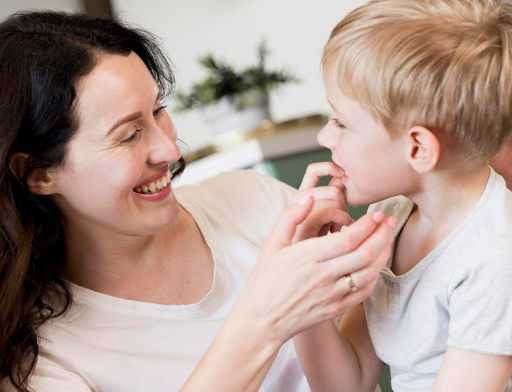
Most children with Down syndrome experience some degree of low oral muscle tone, known clinically as hypotonia. This affects the muscles of the tongue, lips, jaw, and cheeks — the very muscles needed to shape sounds into words. A review published in the Journal of Speech, Language, and Hearing Research (Kent and Vorperian, 2013) confirmed that hypotonia in the oral articulators is a well-documented factor contributing to reduced speech intelligibility in this population.
In practical terms, this is why your child's speech might sound unclear or "mushy," even when they clearly understand what is being said to them. Their comprehension often runs well ahead of their ability to articulate. It can feel frustrating for both of you.
There are also structural differences at play. Research has shown that children with Down syndrome often have a relatively smaller oral cavity, which can affect tongue positioning and the space available for forming sounds accurately (Kent and Vorperian, 2013). Combined with reduced muscle tone, these factors create a physical barrier to clear speech — not a cognitive one.
This is an important distinction. Your child is not struggling because they do not know what to say. They are struggling because the muscles responsible for speech need more targeted support. And that is exactly what OPT is designed to provide.
These oral motor challenges can also influence early literacy development. If you are looking for ways to support your child's reading alongside their speech, our guide on developing reading and spelling skills in children with Down syndrome is a helpful companion resource.
What Is Oral Placement Therapy and How Does It Work
Oral placement therapy is a tactile-based speech approach that directly targets the muscles involved in speech production—the jaw, lips, tongue, and cheeks.
Unlike traditional speech therapy, which relies on auditory and visual cues (hearing and watching sounds), OPT adds a tactile dimension. For children whose muscles lack the strength, coordination, or range of motion to produce sounds—common in Down syndrome—seeing and hearing the target isn't enough. Using specialised tools like bite blocks, therapy horns, and structured straw exercises, the therapist provides direct tactile feedback to help children physically feel the correct position and practise movements until they become automatic..
OPT uses a combination of auditory, visual, and tactile stimulation to improve speech clarity, following a clear hierarchical sequence: facilitate the targeted mouth movement with a tool, practise it, then gradually fade the tool as the child masters the skill independently.
It is important to note that OPT is not a replacement for traditional speech therapy. It works best as a complement to broader speech and language therapy goals. The two approaches together create a more complete picture: OPT builds the sensory and motor foundations that underpin clear speech production.
How Oral Placement Therapy Builds Stronger Speech Skills
Therapy addresses the following areas:
- Jaw stability and grading — Graduated bite blocks help your child practise controlled jaw opening and closing at different heights. A stable jaw is the foundation for accurate vowel and consonant production. Without it, the tongue and lips cannot do their job properly.
- Lip closure and rounding — A progressive series of horn exercises and bubble-blowing activities build lip strength and endurance. These skills are essential for sounds like /p/, /b/, /m/, and /w/, which all require the lips to close or round with precision.
- Tongue retraction and elevation — Structured straw-drinking tasks and specific placement techniques improve tongue control and mobility. This supports sounds like /t/, /d/, /n/, and /l/, where the tongue tip elevates to the incisive papilla (the bumpy ridge just behind top front teeth) in the mouth.
Many children respond well to these activities — blowing horns, using fun straws, and exploring textured tools can feel more like play than therapy, and that sense of enjoyment can support learning. However, every child is different. Some may find certain tools uncomfortable, particularly those with tactile sensitivities or defensiveness. A therapist will take each child's individual responses into account and adapt the activities to suit their needs and comfort level.
At The Speech Practice, our therapists are trained in the TalkTools for Oral Placement Therapy and use these specialised OPT tools as part of a tailored therapy plan for each child.
What Parents Can Expect From Oral Placement Therapy Sessions
If you are considering OPT for your child, here is what the process typically looks like:
- Initial assessment. Your therapist will evaluate your child's oral motor function — jaw stability, lip strength, tongue mobility, and overall muscle tone. This assessment sets a baseline and identifies the specific areas that need support.
- Structured sessions. Sessions usually last 1 hour. They combine OPT exercises with speech production practice, so your child is always working toward real, functional communication — not just isolated muscle drills.
- Consistent frequency. Weekly sessions are standard. Your therapist will also give you a home programme with simple activities to reinforce skills between appointments. Consistency at home plays a significant role in progress.
- Realistic timeline. Every child is different, and progress will vary depending on individual needs, consistency of practice, and clinician guidance. That said, many families begin noticing improved speech clarity over time with regular sessions. Early gains might include clearer individual sounds, while longer-term progress often shows up in connected speech — sentences and conversations becoming easier to understand.
- Your involvement matters. Families are a wonderful part of the journey. As you feel comfortable, your therapist will share easy ways to support your child at home. Nothing overwhelming, just small, manageable moments that fit into your day. You'll always be guided every step of the way.
Because oral motor development influences both speech and feeding, some children benefit from a combined approach. If your child also experiences challenges around mealtimes, our feeding therapy programme can work alongside OPT to address both areas.
Real Speech Therapy Benefits Families Notice Over Time
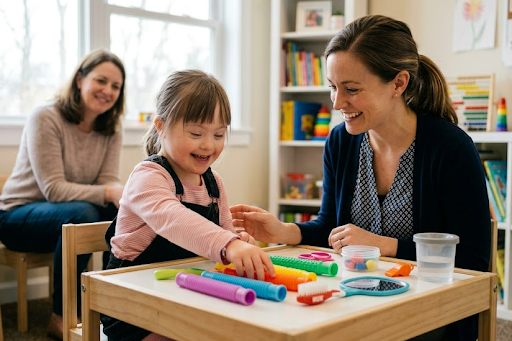
The speech therapy benefits of OPT go well beyond clearer sounds. Here is what families commonly report as their child progresses:
- Words become more understandable. Family members, teachers, and friends begin to follow what your child is saying without needing you to translate.
- Oral motor strength improves overall. Better muscle tone supports not just speech but also chewing, swallowing, and breath control.
- Confidence grows. When a child realises they are being understood, their willingness to speak up increases. They initiate more conversations and participate more freely.
- Social participation expands. Being understood by peers changes a child's daily experience — at school, during playdates, and within the wider family.
A parent survey conducted by Kumin (2006), published in Down Syndrome Research and Practice (Kumin, 2006), found that speech intelligibility was a widespread concern among families. Parents reported that their children experienced greater difficulty being understood in conversation than when saying single words — which is exactly the kind of connected speech challenge that OPT is designed to address.
Progress is incremental. You may not see a dramatic overnight change, but over weeks and months, the small gains build on each other. One day, a grandparent understands a sentence without asking you to repeat it. A teacher comments that your child is speaking more clearly in class. These moments are the real milestones.
Frequently Asked Questions
Is oral placement therapy suitable for very young children with Down syndrome?
Yes. OPT can be adapted for children as young as two. Starting early is valuable because it supports oral motor development during a critical window for speech and language growth. Early intervention often leads to faster and more sustained progress.
How is oral placement therapy different from traditional speech therapy?
Traditional speech therapy relies mainly on auditory and visual cues — listening to a sound and watching the therapist's mouth. Oral placement therapy adds a tactile component, using specialised tools to directly train the muscles responsible for speech production. The two approaches work best together, with OPT building the physical foundation and traditional therapy targeting language and communication skills.
How long before we see improvements in our child's speech clarity?
Every child progresses at their own pace. Many families notice meaningful improvement within three to six months of consistent weekly sessions, combined with regular home practice. Your therapist will track progress at each appointment and adjust the plan to match your child's development.
Help Your Child Speak With Greater Clarity
If you have been wondering whether oral placement therapy could help your child communicate more clearly, the best next step is a conversation. An OPT evaluation gives you a clear picture of your child's oral motor strengths and the specific areas where targeted support can make the biggest difference.
At The Speech Practice, our senior speech therapists are trained in the TalkTools 3-Part Treatment Plan and have experience supporting children with Down syndrome. We would love to help your child build the skills they need to be heard and understood.